

Strangles in Horses
What Every Horse Owner Needs to Know
Strangles is one of the most common and highly contagious infectious diseases affecting horses worldwide. Caused by the bacterium Streptococcus equi subspecies equi, it can spread rapidly through yards, competitions, and livery yards — making early recognition and swift action essential. In this post, we’ll walk you through the key signs to look out for, how the disease is diagnosed, and the treatment options available.
Clinical Signs
The incubation period for strangles is typically 3–14 days following exposure. Once clinical signs develop, they can progress quickly and vary in severity from horse to horse.
Early Signs
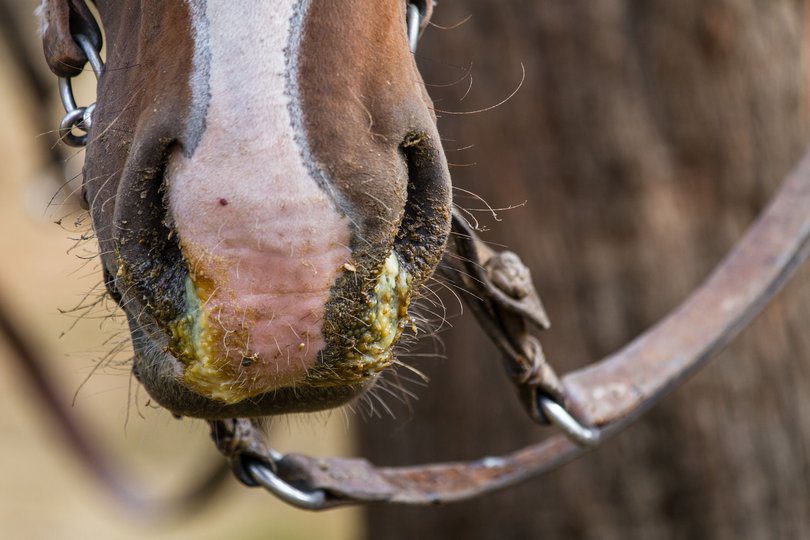
In the early stages, strangles can look deceptively similar to a common cold or mild respiratory infection. Owners may notice a sudden onset of fever (often above 38.5°C / 101.3°F), lethargy and depression, reduced appetite, and a clear, watery nasal discharge that quickly becomes thick and yellow-green.
Classic Signs
As the disease progresses, the hallmark feature of strangles becomes apparent: swelling of the lymph nodes (glands) beneath the jaw and around the throat. These abscesses fill with pus and typically rupture after 1–2 weeks, releasing large quantities of creamy, highly infectious discharge. You may also notice your horse adopting a characteristic ‘roached’ neck posture and a soft cough. In severe cases, the swelling can partially obstruct the airway — lending the disease its rather alarming name.
Potential Complications – Very rare!
While most horses recover fully, a very small proportion develop more serious complications. ‘Bastard strangles’ occurs when abscesses form in internal organs such as the lungs, abdomen, or brain, often with a poor prognosis. Purpura haemorrhagica is a rare but life-threatening immune-mediated vasculitis that can develop weeks after infection, causing severe limb swelling and skin lesions. Some horses also become long-term carriers, shedding the bacteria from a persistent infection within the guttural pouches without showing any outward signs of illness.
Diagnosis
If you suspect strangles, it is important to contact us promptly and to isolate the affected horse immediately to prevent further spread. We will carry out a clinical examination and is likely to recommend one or more of the following diagnostic tests.
Bacterial Culture and PCR
Swabs taken from nasal discharge, abscess material, or the nasopharynx (the back of the throat) can be sent to our laboratory for bacterial culture and sensitivity testing or polymerase chain reaction (PCR) analysis. PCR is particularly sensitive and can detect the presence of S. equi DNA even in low numbers, making it a valuable tool for identifying carriers.
Endoscopy and Guttural Pouch Lavage
Where carrier status is suspected or you need quick results, we may recommend endoscopy — passing a flexible camera into the airways — to examine the guttural pouches directly. Lavage fluid collected from the pouches can be sent for culture and PCR. This is currently the “gold standard” for identifying horses that are harbouring the bacterium silently.
Blood Tests
A blood sample may be taken to check for elevated white blood cells and inflammatory markers, or to test for antibodies against S. equi (serology). Serology can be useful for herd-level screening, though a positive result indicates exposure rather than active infection, and must be interpreted alongside other findings. – For further more detailed information on the blood test please call the practice as the blood test is not applicable in all scenarios.
Treatment
Treatment of strangles depends on the stage and severity of the disease.
Supportive Care
For most uncomplicated cases, supportive care is the mainstay of treatment. This includes rest in well-ventilated stable, provision of soft, easily swallowed feed (such as soaked hay or a mash) to encourage eating despite discomfort, access to fresh water at all times, and regular monitoring of temperature and clinical signs.
Abscess Management
Warm compresses applied to the swollen lymph nodes can help encourage abscesses to mature and rupture more quickly. Once ruptured, the area should be kept clean and the discharge disposed of safely to minimise environmental contamination. Your vet may lance an abscess that is slow to burst naturally. All discharge must be treated as highly infectious.
Antibiotics
The use of antibiotics in strangles is a topic of some debate among equine vets. Penicillin remains the antibiotic of choice when treatment is indicated. However, antibiotics given early in the disease course may prevent abscesses from maturing and rupturing, potentially prolonging the illness or masking carrier status. For this reason, they are typically reserved for horses with high fevers, severe systemic illness, or complications such as bastard strangles. We can advise whether antibiotics are appropriate for your horse.
Pain Relief and Anti-Inflammatories
Non-steroidal anti-inflammatory drugs (NSAIDs) such as phenylbutazone (‘bute’) or flunixin meglumine may be prescribed to help reduce fever, pain, and inflammation, improving the horse’s comfort and encouraging it to eat and drink.
Treatment of Carriers
Horses identified as guttural pouch carriers require specific treatment to clear the infection. This typically involves repeated endoscopic lavage of the guttural pouches with antibiotic solutions, and may be combined with systemic antibiotics. Treatment can take several weeks, and follow-up testing is essential to confirm clearance before the horse returns to the herd.
Biosecurity and Prevention
Strict biosecurity measures are crucial to containing an outbreak and protecting horses that have not yet been affected. Isolate any horse with signs of strangles immediately, ideally in a separate building with a dedicated handler. Use separate equipment, clothing, and footwear for infected horses, and disinfect all surfaces and water troughs thoroughly. Do not move horses on or off the yard until the all-clear has been given following diagnostic tests.
A vaccine against strangles is available, which can be used in naive horses to help reduce the severity of disease. Speak to the practice about whether vaccination is appropriate for your yard. It is not suitable for use in horses that have already been exposed or that test positive for antibodies.
When to Call Your Us
Contact us straight away if your horse develops a high temperature, nasal discharge, or swollen lymph nodes beneath the jaw — especially if there has been recent contact with new or returning horses. Early intervention and good biosecurity can make a significant difference to the outcome for your horse and to the welfare of the horses around them.